October 13, 2025
The Billion-Dollar Question: Is Your Bank Overpaying for AI? Why GPU-Free AI Agents Are the Future of Finance
In the high-stakes world of banking and finance, every penny counts, and speed is paramount. Yet, an invisible money pit is quietly draining resources from even the most forward-thinking institutions, the seemingly indispensable GPU. While some banks boast about their internal AI agents, a critical question is emerging: Are they unwittingly bleeding cash on GPU infrastructure when a more cost-effective, equally powerful alternative exists? The answer is a resounding YES, and the solution lies in the rise of GPU-free AI for inference, poised to revolutionize how financial institutions deploy intelligent agents, slashing operational costs without sacrificing performance or compliance.
The Brief Breakdown:
It’s a common misconception that AI equals GPUs. For years, the computational muscle required to train complex AI models, especially large language models (LLMs) and deep learning networks, has undeniably resided in Graphics Processing Units. Their parallel processing capabilities make them ideal for crunching massive datasets and iteratively refining model parameters.
However, the picture changes dramatically when we talk about AI inference. Inference is the process of putting a trained AI model to work – using it to make predictions, analyze data, or power decisions in real-time. Think of it as the difference between building a car (training) and driving it (inference). While building a high-performance car requires specialized tools and heavy machinery, driving it for everyday tasks doesn’t.
This is where the financial sector’s current GPU dependency for AI agents is becoming an unsustainable burden. We’ve seen banks invest heavily in GPU farms for their internal AI agents, often overlooking a critical distinction: most AI agent tasks in banking are inference-heavy, not training-heavy.
The Unseen Costs of GPU Overkill in Banking:
- Astronomical Hardware Costs: High-end GPUs for AI are notoriously expensive. A single professional-grade GPU can cost tens of thousands of dollars. Multiply that by the dozens, if not hundreds, of units a bank might deploy for its AI initiatives, and the CapEx quickly becomes eye-watering.
- Power Consumption and Cooling Nightmares: GPUs are power hogs. Running them 24/7 generates immense heat, requiring sophisticated and equally expensive cooling systems. This translates directly into skyrocketing electricity bills and increased carbon footprint, a concern for environmentally conscious institutions.
- Underutilization and Idle Assets: The brutal truth is that many GPUs purchased for AI in banks sit idle for significant periods, or are underutilized for inference tasks that don’t demand their full processing power. This is a wasted investment, akin to buying a Formula 1 car for city driving.
- Scaling Headaches: Scaling GPU infrastructure is complex and capital-intensive. Adding more GPUs means more space, more power, more cooling, and more specialized IT personnel to manage it all.
The Real Solution: Unleashing the Power of CPU-Based AI Agents
The paradigm shift is happening now. Advances in CPU architecture and, crucially, massive leaps in AI model optimization are making CPU-only inference not just possible, but preferable for a vast majority of financial AI agent use cases.
Here’s why GPU-free AI agents are the game-changer for banking and finance:
- Massive Cost Reduction:
- Hardware Savings: CPUs are significantly cheaper to acquire than GPUs. Banks can leverage existing server infrastructure, dramatically extending the lifespan and utility of their current assets.
- Energy Efficiency: Modern CPUs are far more power-efficient for inference tasks than GPUs. This translates into substantially lower electricity bills and reduced cooling requirements, directly impacting the bottom line.
- Reduced Cloud Spend: For banks relying on cloud-based AI, opting for CPU-optimized inference instances can slash monthly cloud expenses, which are often heavily weighted by GPU utilization fees.
2. Unmatched Ubiquity and Scalability:
- Leverage Existing Infrastructure: Every server in a bank’s data center, every branch office’s local server, and even desktop machines in some cases, are powered by CPUs. This ubiquity means AI agents can be deployed almost anywhere, instantly expanding reach and reducing deployment friction.
- Simplified Scaling: Scaling CPU-based inference is often as simple as provisioning more virtual machines or adding commodity servers, avoiding the specialized logistical challenges of GPU expansion.
3. Pioneering Software Optimization for Inference:
- Quantization: This groundbreaking technique allows AI models to run with lower numerical precision (e.g., 8-bit integers instead of 32-bit floating points) with minimal accuracy loss. The result? Dramatically smaller models that execute faster on CPUs.
- Pruning and Sparsity: AI models can be “thinned” by removing redundant connections or weights, making them more efficient for CPU processing without compromising performance.
- Optimized Libraries and Frameworks: Companies like Intel (with OpenVINO) and AMD (with ROCm), along with open-source communities, are pouring resources into developing highly optimized software libraries and frameworks that make CPU inference blazing fast for many AI models. This means developers can write code that seamlessly leverages CPU power for AI.
- On-Device/Edge Deployment: For AI agents requiring near-instantaneous responses, like fraud detection at the point of sale or personalized customer service on a mobile app, CPU-based edge AI eliminates network latency and keeps sensitive financial data on-device, enhancing security and privacy.
Real-World Impact and Use Cases: Cutting the AI Bill
The shift to GPU-free AI inference translates directly into tangible cost savings across various sectors:
Companies like Ampere Computing are at the forefront, advocating for CPU-centric approaches to AI inference, highlighting the energy efficiency and cost advantages, particularly as models become more specialized and refined for specific tasks rather than requiring a “supercomputer” for every prediction. Intel and VMware are also collaborating to enable scalable and efficient AI operations on CPU-driven infrastructure, even for tasks like LLM inference, by leveraging technologies like Intel’s Advanced Matrix Extensions (AMX).
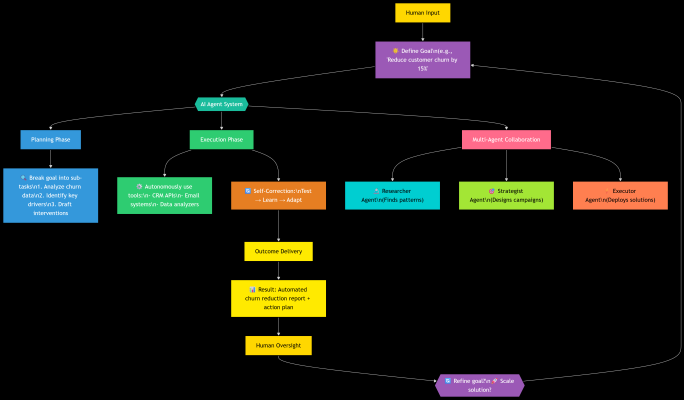
Imagine AI agents deployed across a bank, performing critical tasks without the GPU overhead:
Leading the charge, institutions like Bank of America with its AI assistant Erica, and Capital One with Eno are processing millions of customer interactions daily. These sophisticated virtual assistants exemplify the massive scale of AI inference workloads in finance, from answering balance inquiries and tracking spending to flagging potential fraud and providing personalized financial insights. Each of these interactions, while seemingly simple, represents a complex AI decision point.
For an AI agent like Erica or Eno, optimizing their underlying models for CPU-based inference means that every single customer query or proactive alert can be processed at a significantly lower operational cost. Multiply that by billions of interactions annually, and the savings from shedding expensive GPU reliance become monumental, directly impacting the bank’s bottom line.
Specifically, let’s look at key areas where GPU-free AI agents deliver:
- Customer Service Bots (Chatbots/Voicebots): Handling millions of customer queries daily. Each interaction is an inference. CPU-powered bots mean lower operational costs per interaction.
- Fraud Detection: AI agents constantly analyze transaction streams for anomalies. For every single transaction, this is an inference task. Running this on optimized CPUs offers real-time detection without the massive GPU bill.
- Automated Document Processing (KYC/AML): Analyzing vast numbers of identity documents, loan applications, or regulatory filings. OCR and NLP models for these tasks are highly optimizable for CPU inference.
- Credit Scoring & Loan Underwriting: Rapidly assessing creditworthiness based on numerous data points.
- Risk Management & Compliance Monitoring: Continuously scanning market data, regulatory updates, and internal logs for potential risks or non-compliance.
- Personalized Banking Recommendations: Delivering tailored product suggestions to customers based on their financial behavior.
These are not future aspirations; these are capabilities being deployed today by forward-thinking institutions who have recognized the GPU inference trap. They are embracing the power of optimized, CPU-driven AI.
The Path Forward for Financial Institutions:
- Audit Your AI Workloads: Understand which AI tasks are true training workloads (where GPUs might still be essential) versus inference workloads. The vast majority of live AI agent deployments fall into the latter.
- Embrace Model Optimization: Invest in data scientists and MLOps teams skilled in techniques like quantization, pruning, and model compression for CPU deployment.
- Leverage Open-Source and Specialized Libraries: Explore and integrate CPU-optimized AI inference libraries and frameworks.
- Strategic Hardware Procurement: Prioritize powerful general-purpose CPUs and consider vendors that are leading in CPU-based AI acceleration.
- Pilot and Prove: Start with pilot projects for CPU-only AI agents in a controlled environment to demonstrate cost savings and performance gains before a wider rollout.
Conclusion: Beyond the Hype, Towards Sustainable AI
The banking and financial sector stands at a pivotal moment. The allure of AI’s transformative power is undeniable, but the associated costs, particularly from an overreliance on GPUs for inference, can cripple even the most ambitious initiatives. The real challenge is not just adopting AI, but adopting it intelligently and sustainably.
By shifting focus to GPU-free AI agents for inference, banks can unlock unprecedented operational efficiencies, drastically cut costs, and accelerate their digital transformation. This isn’t just about saving money; it’s about building a future where AI is pervasive, powerful, and economically viable, truly solving real-world challenges in a hyper-competitive, regulated industry. The era of GPU-free AI is here, and for financial institutions, ignoring it is a luxury they simply can not afford.