misbah.io
  • Home
  • Features
  • portfolio
  • Resume
  • Clients
  • Testimonials
  • Blog
  • Contacts
find with me
misbah.io
misbah.io

AI Consultant & Solution Architect | AI Agents | Google Certified Data Analyst| Data Scientist | LLM | ML | Entrepreneur

  • Home
  • Features
  • portfolio
  • Resume
  • Clients
  • Testimonials
  • Blog
  • Contacts
find with me
External Link
162

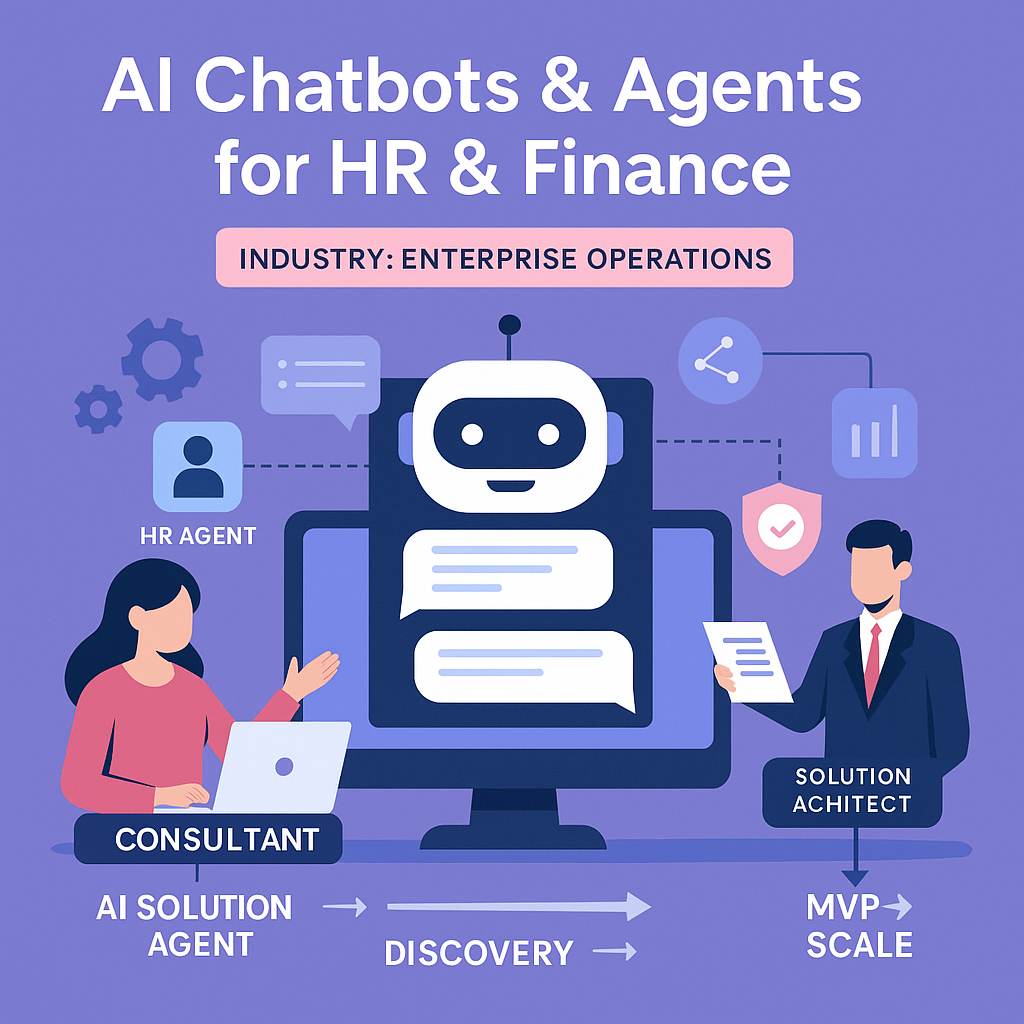
Case Study — AI Chatbots & Agents for HR & Finance

Case Study — AI Chatbots & Agents for HR & Finance

Industry: Enterprise Operations
Services: AI Consulting, Solution Architecture, Agent Design
Engagement: Discovery → MVP → Scale

LIKE THIS 162
VIEW PROJECT

Industry: Enterprise Operations
Services: AI Consulting, Solution Architecture, Agent Design
Engagement: Discovery → MVP → Scale

About the client

A mid-size organization aiming to reduce HR ticket volume and automate finance-related queries while ensuring compliance, data security, and auditability across internal communication channels.

About the project

The goal was to design and deploy domain-specific AI chatbots and agents for HR and Finance to handle policy questions, process leave and reimbursement requests, and provide instant access to finance FAQs.
The system was implemented across Slack, Microsoft Teams, and a web portal for seamless employee engagement.

Duration: 4–6 months (MVP delivered in 8 weeks)
Technologies: Azure OpenAI / OpenAI, LangChain / LlamaIndex, Vector DB (pgvector / FAISS), FastAPI, PostgreSQL, Power BI, Azure / GCP

Application functionality

HR Agent: Leave management, benefits FAQs, policy Q&A, automated form filling, status tracking
Finance Agent: Expense policy Q&A, receipt verification, reimbursement updates, month-end summaries
RAG Engine: Context-aware responses using internal policy documents
Channels: Slack / Teams integration and secure web-based console
Admin Tools: Knowledge management, guardrails, analytics dashboard, role-based access

Solution

As the AI Consultant and Solution Architect, I led the end-to-end design, workflow mapping, and RAG pipeline implementation.
I integrated vector-based retrieval and policy guardrails for grounded, accurate answers.
The architecture included SSO, data redaction, and modular containers, enabling HR and Finance teams to update content independently without developer intervention.

Results

  • 50–60% reduction in HR ticket volume within the first quarter
  • ~40% faster finance query resolution time
  • Enhanced transparency with auditable AI responses and citation logs
  • Created reusable, domain-adaptable agent templates for future departments

External Link
184

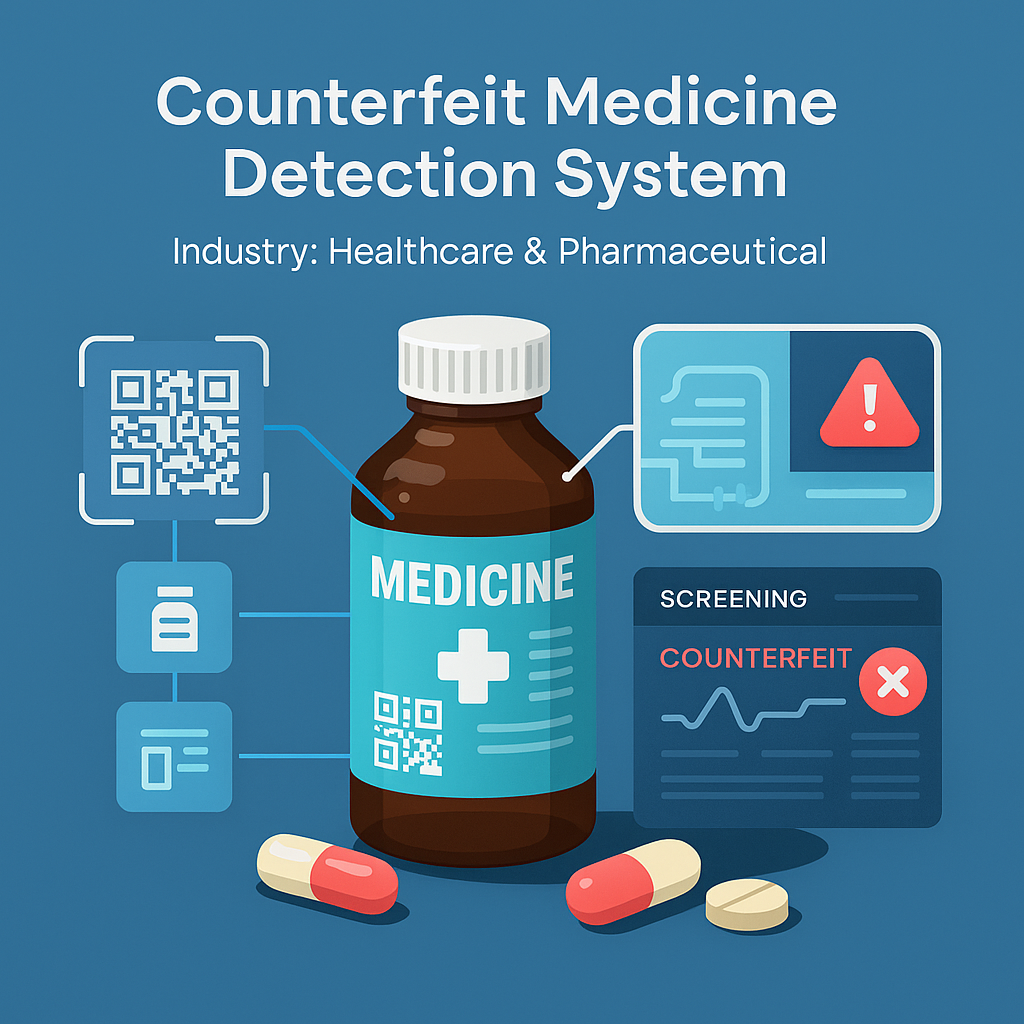
Case Study – Counterfeit Medicine Detection System

Case Study – Counterfeit Medicine Detection System

Industry: Healthcare & Pharmaceutical
Services: AI Consulting, Computer Vision, Product Development
Engagement: Research → Prototype → Validation

LIKE THIS 184
VIEW PROJECT

Industry: Healthcare & Pharmaceutical
Services: AI Consulting, Computer Vision, Product Development
Engagement: Research → Prototype → Validation

About the client

A healthcare technology initiative focused on improving drug authenticity verification and public safety by leveraging AI-driven detection and supply-chain transparency.

About the project

The project aimed to design an AI-based counterfeit medicine detection system capable of identifying fake pharmaceutical products before they reach patients.
The platform analyzed packaging, labeling, QR codes, and chemical patterns using AI and computer vision to ensure authenticity during distribution.

Duration: 6–8 months
Technologies: Python, TensorFlow / PyTorch, OpenCV, YOLOv5, FastAPI, AWS S3, PostgreSQL, Pandas, NumPy

Application functionality

Image Analysis: Detect inconsistencies in labels, texture, and holograms using deep learning
Barcode & QR Validation: Verify serialization and product metadata against trusted databases
Supply Chain Integration: Real-time verification for pharmacies and distributors
Dashboard: Display analytics, detection reports, and risk scores
Mobile Interface: Allow on-the-spot verification via smartphone camera

Solution

As the AI Solution Architect and Consultant, I designed and implemented the entire detection pipeline — from image preprocessing to deep learning classification.
Using YOLOv5 for object detection and CNN-based models for feature validation, the system achieved high precision in distinguishing authentic vs counterfeit medicines.
The architecture was modular, scalable, and cloud-hosted, ensuring fast inference and easy integration with pharmacy systems.

Results

  • Achieved ~95% accuracy in counterfeit detection testing
  • Developed a working prototype validated with real packaging samples
  • Enhanced drug authentication and regulatory compliance across the supply chain
  • Provided research documentation for potential national-scale implementation
Standard
219

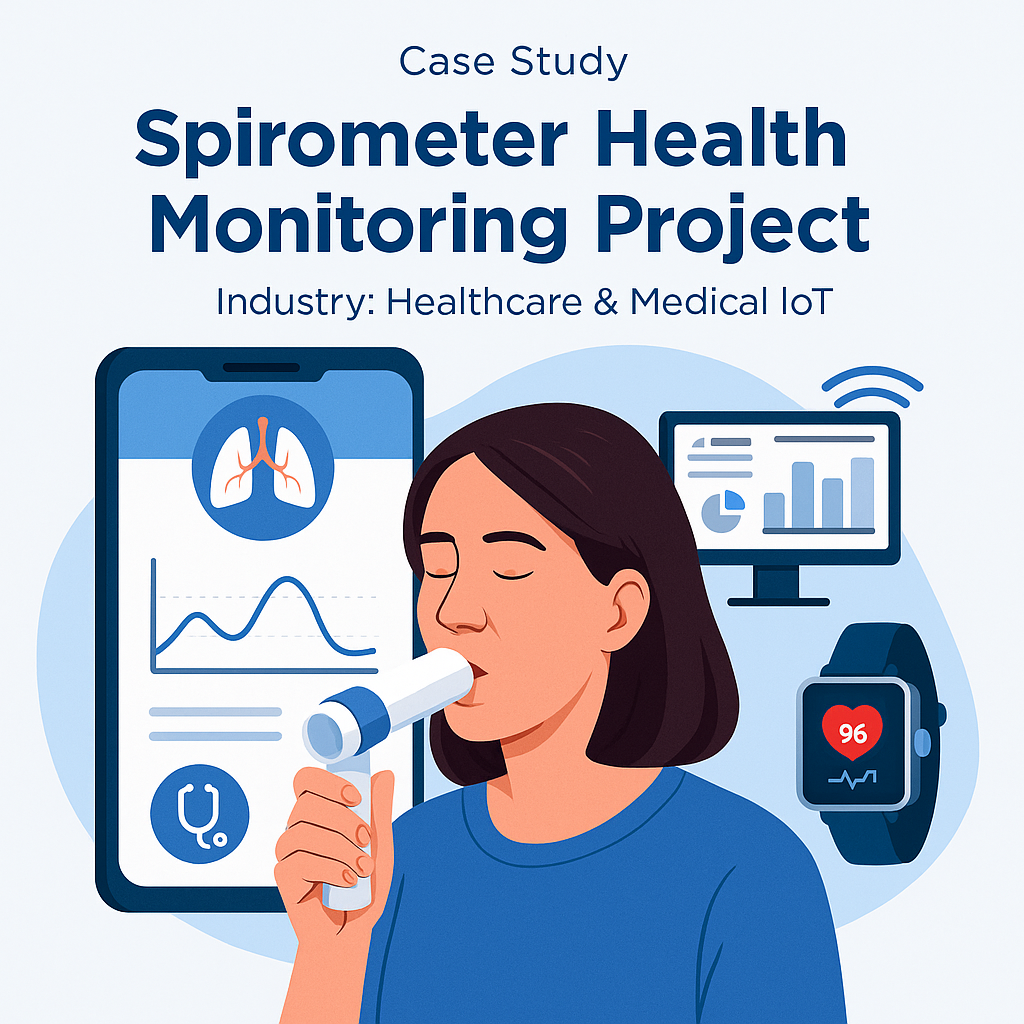
Case Study — Spirometer Health Monitoring Project

Case Study — Spirometer Health Monitoring Project

Industry: Healthcare & Medical IoT
Services: AI Consulting, Solution Architecture, Product Development
Engagement: Concept → Prototype → Pilot

LIKE THIS 219
VIEW PROJECT

Industry: Healthcare & Medical IoT
Services: AI Consulting, Solution Architecture, Product Development
Engagement: Concept → Prototype → Pilot

About the client

A health-tech startup focused on leveraging AI and IoT to monitor and detect respiratory diseases such as asthma and COPD through real-time spirometry data.

About the project

The objective was to develop an AI-powered spirometer system that could measure lung performance, detect early signs of respiratory issues, and transmit data to healthcare providers for continuous monitoring.
The solution combined IoT sensor technology, AI analytics, and cloud integration to create a scalable, connected health ecosystem.

Duration: 5–7 months
Technologies: Python, TensorFlow Lite, Scikit-learn, Node-RED, MQTT, AWS IoT, Firebase, Streamlit, Power BI

Application functionality

IoT Data Capture: Real-time airflow and pressure readings via spirometer sensors
AI Analytics: Machine learning algorithms for anomaly detection and health scoring
Dashboard: Visualize breathing trends, lung capacity, and historical reports
Mobile App Integration: Remote access for patients and doctors
Cloud Sync: Secure data transmission for research and multi-device tracking

Solution

As the AI Consultant and Solution Architect, I led the architecture and integration of the end-to-end IoT + AI system.
I developed the data pipeline connecting hardware sensors to AI inference models and implemented predictive algorithms for early disease identification.
The system adhered to healthcare compliance standards (HIPAA-ready) and enabled remote diagnostics through real-time data analytics.

Results

  • Enabled real-time lung performance tracking and early disease detection
  • Built a functional prototype used for clinical evaluation and pilot testing
  • Empowered doctors with data-driven insights for remote patient monitoring
  • Established a foundation for scalable health IoT platforms
External Link
146

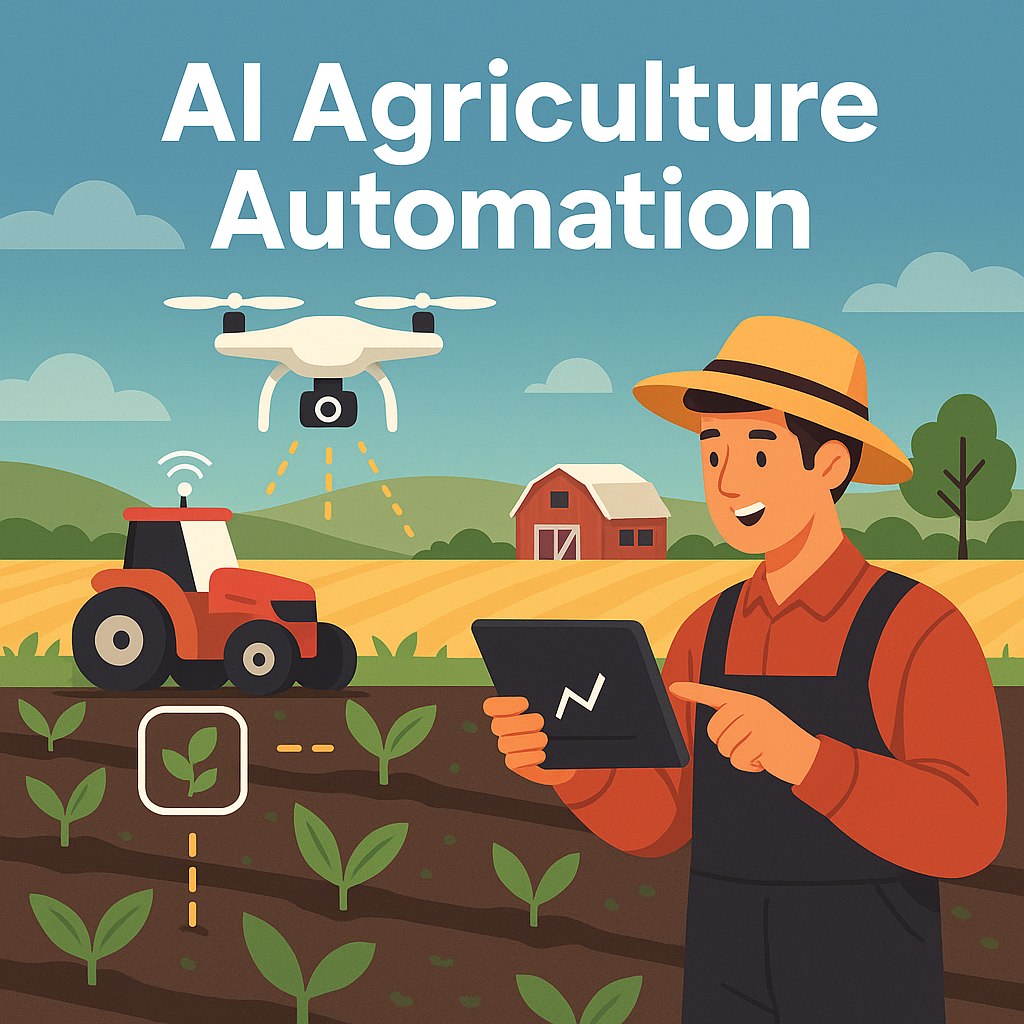
Case Study — AI Agriculture Automation Platform

Case Study — AI Agriculture Automation Platform

Industry: Agriculture & AgriTech
Services: AI Consulting, Computer Vision, Automation Design
Engagement: Research → Development → Field Testing

LIKE THIS 146
VIEW PROJECT

Industry: Agriculture & AgriTech
Services: AI Consulting, Computer Vision, Automation Design
Engagement: Research → Development → Field Testing

About the client

An agri-tech initiative aiming to enhance crop productivity and reduce manual dependency through AI-driven monitoring, automation, and smart decision-making systems for farmers and agri-businesses.

About the project

The project involved developing an AI-powered agriculture automation platform that utilizes computer vision, IoT sensors, and predictive analytics to monitor crop health, detect diseases, and optimize irrigation and fertilizer usage.
The system provided real-time insights, helping farmers make data-backed decisions and improve yield efficiency.

Duration: 6–8 months
Technologies: Python, OpenCV, TensorFlow, Scikit-learn, IoT Sensors, Drone Imagery, Node-RED, AWS Cloud, Power BI

Application functionality

Crop Disease Detection: Identifies plant diseases using image recognition and pattern analysis
Soil & Weather Monitoring: Integrates IoT sensors to analyze soil moisture and weather data
Irrigation Automation: Smart control systems adjust watering schedules based on predictive models
Yield Forecasting: Uses AI to predict crop yield and optimize resource allocation
Farmer Dashboard: Displays real-time insights, alerts, and productivity metrics

Solution

As the AI Consultant and Solution Architect, I led the creation of an integrated AI ecosystem combining IoT devices, image analytics, and predictive algorithms.
I designed workflows that linked drone imagery with sensor data, enabling precision farming through actionable intelligence.
The architecture was cloud-based, scalable, and capable of adapting to different crop environments and climates.

Results

  • Increased crop yield efficiency by 25–30% during pilot runs
  • Reduced irrigation and fertilizer wastage by up to 40%
  • Automated early disease detection and intervention workflows
  • Created a reusable smart farming framework for future deployments
Standard
349

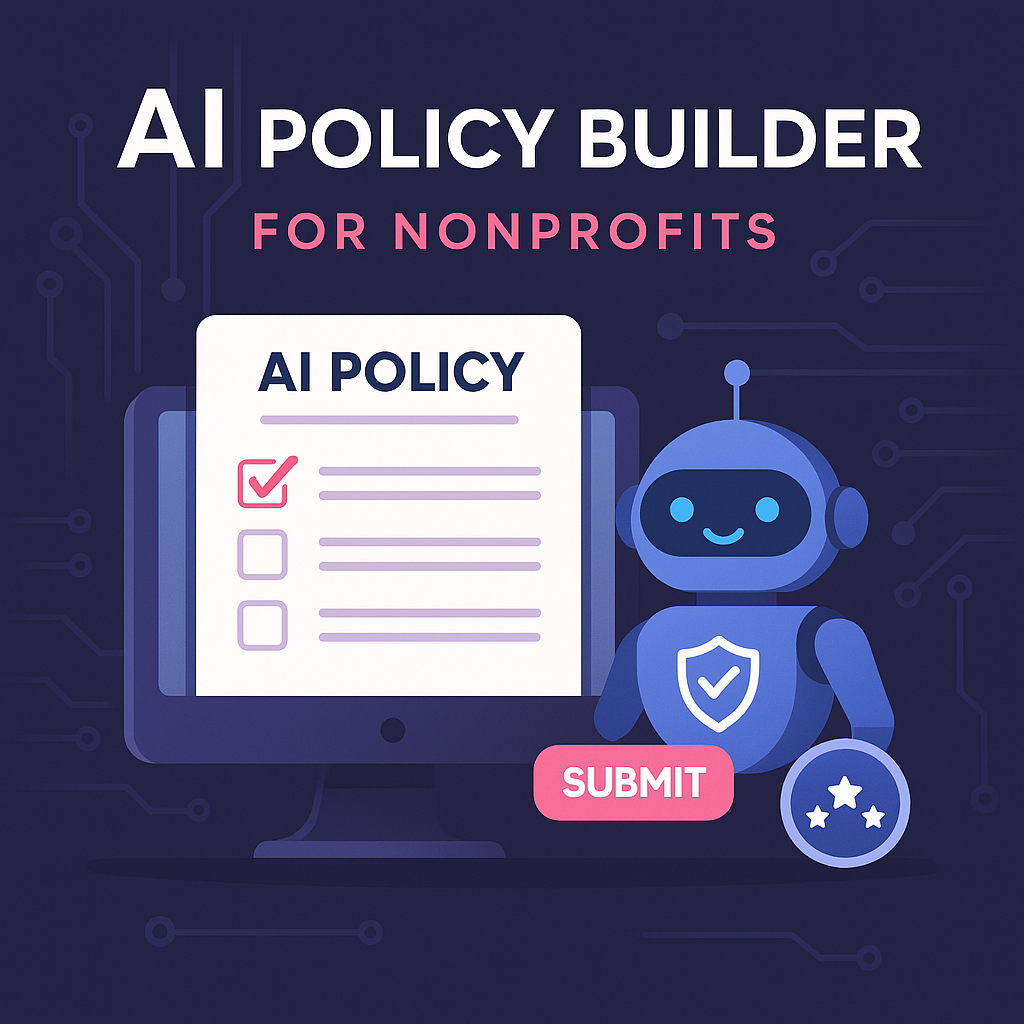
Case Study — AI Policy Builder for Nonprofits

Case Study — AI Policy Builder for Nonprofits

Industry: Public Sector & Nonprofit Technology
Services: AI Consulting, Product Management, Solution Architecture
Engagement: Ideation → Design → Implementation

LIKE THIS 349
VIEW PROJECT

Industry: Public Sector & Nonprofit Technology
Services: AI Consulting, Product Management, Solution Architecture
Engagement: Ideation → Design → Implementation

About the client

A nonprofit-focused organization seeking to streamline the creation of AI governance policies and ensure responsible AI adoption across donor-funded projects and social-impact initiatives.

About the project

The goal was to build an AI Policy Builder platform that empowers nonprofits to craft, customize, and adopt ethical AI policies with ease.
The system guides users through a structured framework of templates, recommendations, and risk assessments—helping organizations establish compliance and transparency.

Duration: 4–6 months
Technologies: Python, FastAPI, PostgreSQL, Streamlit, LangChain, OpenAI API, Azure Cloud, Power BI

Application functionality

Policy Builder Wizard: Step-by-step guidance to create AI policies aligned with global standards
Template Library: Predefined and editable templates for governance, data usage, and ethics
AI Assistant: Suggests best practices based on organization type and AI maturity
Collaboration Tools: Enables multi-user editing and approval workflows
Dashboard: Tracks completion status, version control, and compliance metrics

Solution

As the AI Consultant and Product Architect, I led the platform’s full lifecycle—from conceptual framework to technical design and deployment.
I designed the modular policy engine, enabling customization for different NGO types, and integrated an LLM-driven recommendation system to provide context-aware policy suggestions.
The solution combined structured templates with dynamic AI guidance, ensuring nonprofits could easily create compliant and transparent AI policies.

Results

  • Improved policy creation efficiency by 40% across participating organizations
  • Enabled standardized AI governance practices within the nonprofit ecosystem
  • Enhanced accountability, compliance, and donor trust
  • Established a scalable foundation for future AI ethics and policy management tools
Standard
346

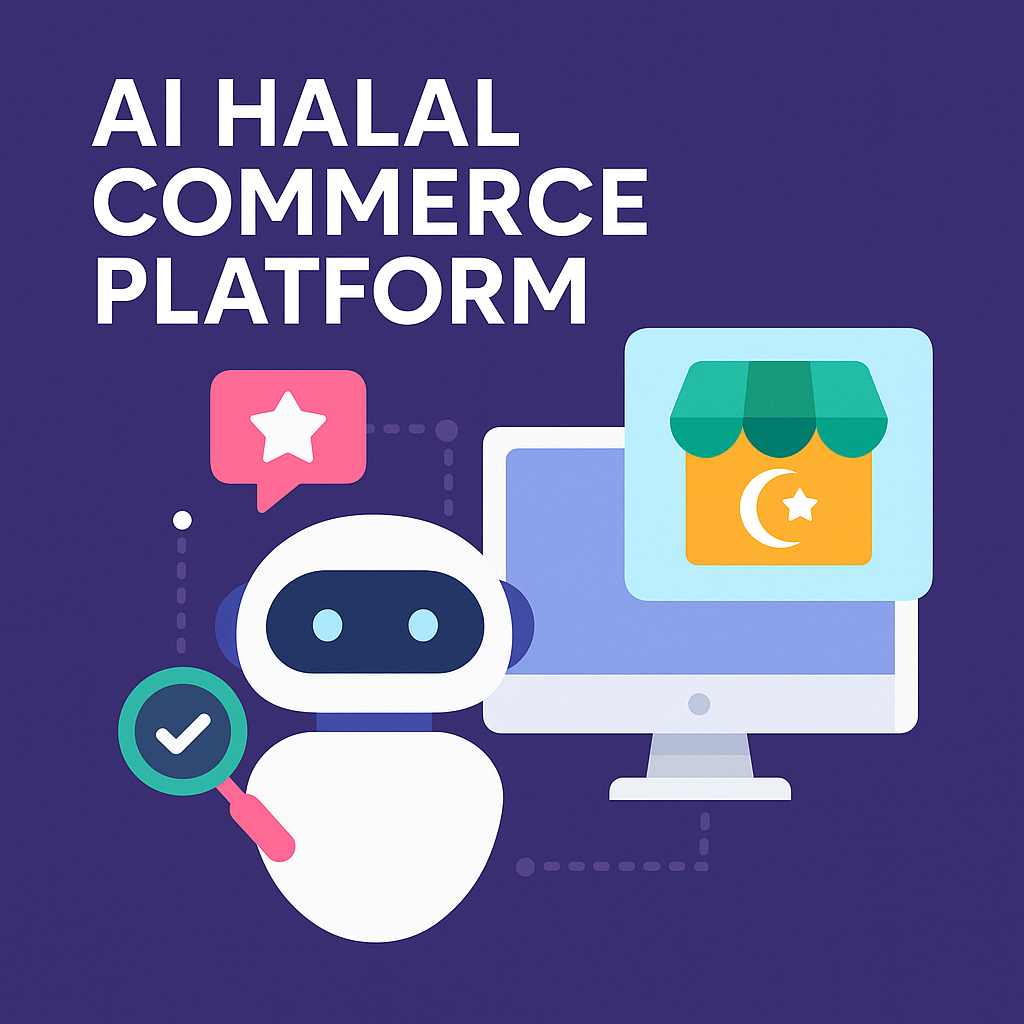
Case Study — AI Halal Commerce Platform

Case Study — AI Halal Commerce Platform

Industry: E-Commerce & Retail Technology
Services: AI Consulting, Solution Architecture, Product Strategy
Engagement: Concept → Development → Market Launch

LIKE THIS 346
VIEW PROJECT

Industry: E-Commerce & Retail Technology
Services: AI Consulting, Solution Architecture, Product Strategy
Engagement: Concept → Development → Market Launch

About the client

A halal-focused e-commerce startup committed to promoting ethical and Sharia-compliant products through AI-driven product verification, recommendation, and consumer trust systems.

About the project

The initiative aimed to develop an AI-powered halal commerce platform that verifies product authenticity, categorizes halal-compliant items, and personalizes the user shopping experience.
The system combined AI classification models, data validation pipelines, and intelligent recommendation engines to ensure accuracy, transparency, and scalability across multiple product categories.

Duration: 6–9 months
Technologies: Python, FastAPI, OpenAI API, LangChain, PostgreSQL, Power BI, AWS Cloud, Streamlit / React

Application functionality

Halal Verification Engine: Uses AI to validate product data against certification standards
Recommendation System: Provides personalized suggestions based on user interests and verified compliance
Smart Search: AI-driven search and product categorization using NLP
Vendor Dashboard: Allows merchants to manage, verify, and update halal certifications
Consumer Interface: Intuitive UI for browsing, purchasing, and reviewing halal-certified products

Solution

As the AI Consultant and Solution Architect, I designed the platform’s intelligent backend to automate halal certification validation and product categorization.
I implemented AI classification pipelines to process product metadata, integrated API-based verification with halal authorities, and developed a personalized recommendation engine powered by user behavior analytics.
The result was a trusted, AI-first marketplace that blends compliance with modern user experience.

Results

  • Established a data-driven halal commerce ecosystem for scalable regional expansion
  • Verified 10,000+ products for halal compliance within the first rollout
  • Increased consumer trust and engagement by 45% through AI-based personalizationy
  • Reduced manual verification time by 60% using automated validation pipelines
See More

© 2026. All rights reserved by misbah.io